The Fable of Mythos
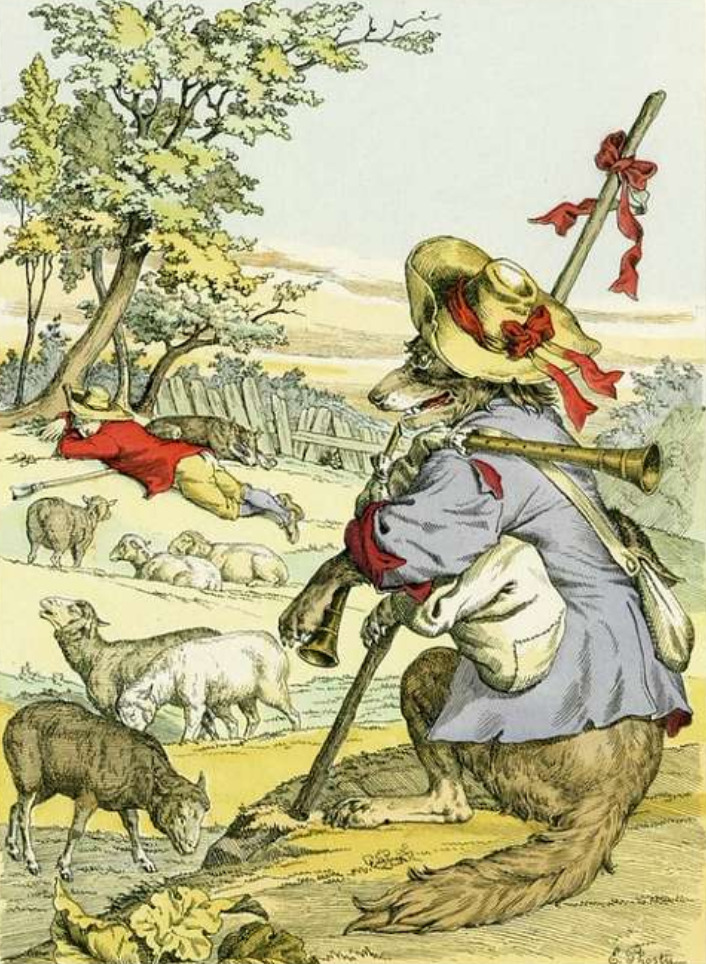
Earlier this year, Antrhopic announced a large language model (LLM) called Mythos, a model they claimed to be so powerful for finding software exploits that it was too dangerous to release to the general public123. Instead, they provided a limited release of this model to select organizations as part of Project Glasswing4. Then, last week, Antrhopic released a version of this model called Fabel5. Current subscribers were allowed an entire three days to work with this model before the US federal government issued an unpublished export control order for Anthropic, citing concerns of model jail breaking and weaponization, to restrict access to the model from any foreign nationals living in America or abroad6. Anthropic denied the government’s finding, but complied with the order by revoking access to the model for all customers7. There has been a massive roller coaster of press over this “frontier model,” much of it seeming to be media-hype and exaggerated claims. However, I question if this latest intervention by the US government is really about this coding model. The names of the products, the timing and the general story surrounding technology leads me to believe this is a narrative propaganda tool being used to increase government regulation, cripple competition and push for increased government surveillance.
The Myth and the Magic
Anthropic’s models have names like Haiku, Opus and Sonnet, all which seem related to songs or poetry. But this most recent model started as Mythos, and the released version was Fable. Both of these names invoke ideas of fantasy or mystical fictions. As a developer, my peers and I got to play with Fabel for all of three days, before it disappeared over a weekend. Think about that: software engineers got to use it for work, and by the weekend it was no longer available, even on our personal accounts.
I used Fable pretty heavily on some complex features while it was available. I was impressed by some of its planning outputs and did find it somewhat cleaner than previous models. My friends and colleagues have given me various types of feedback, some amazed by it while others seeing it as a disappointment or incremental improvement.
The Call for Regulation
Earlier in June, Anthropic had called for a “global pause” on further AI development due to risks of “self-improvement8.” So, they called for a pause and then turned around and made a new product release? What I find most concerning is a post from Anthropic’s founder calling for government regulation9.
It is time to go beyond transparency to more serious and binding regulation of AI. I believe the best analogy, at least at the current stage of the exponential, is to cars, airplanes, or drugs—powerful technologies essential to the modern economy, but capable of killing large numbers of people if designed or operated poorly. I therefore believe we should model AI regulation on agencies like the Federal Aviation Administration (FAA). Frontier AI models, like airplanes, should be required to go through technical testing and auditing, and their release should be blocked or reversed as a threat to public safety if they do not meet high standards of safety. I am grateful to see the Trump administration’s Executive Order move incrementally towards a greater role for government in AI, though Anthropic’s proposal recommends even further action. -Dario Modei9
Whenever a company within an industry calls for more regulation, it’s rarely in the public’s interest. It’s usually a means of preventing competitors from entering their market. What would regulation even look like in this case? Would developers be required to submit any software that multiplies matrices together to the United States government? Will linear algebra software fall under export regulations? Will there be more cases similar to Roman Storm and Tornado Cash, where simply writing open source software could get someone arrested for evading sanctions?
People may say, why didn’t you just disable access to foreign nationals? Why did you disable access to everybody? And this comes back to an issue we talk about a lot … How are you going to keep foreign nationals from using it? When I sign up, all I need to provide is an email and my credit card information … That’s all I need to sign up for one of these services … but how do they know if I’m a foreign national, US citizen or anything else? Maybe my ID will show that. Maybe my ID is not enough. Maybe I got to show my passport. Maybe I show my ID, my passport, and my birth certificate to show proof. You see where we’re going with this? This is moving the internet in the direction of you need to show your passport, your birth certificate, and your ID to sign up for a service … And to do that would require that you put all this infrastructure in place … I’ve spoken about a lot of the age verification laws that have been popping up recently and why I’m annoyed by them … This is bad. I don’t like this. And this kind of speed-runs you further in that direction. -Louis Rossmann10.
The entire story with the release and redaction of Fable, followed by calls for regulation, reeks horribly of surveillance-state propaganda. It creates a narrative of fear, which could provoke citizens to call for protection in a way that stifles innovation and pushes us further into surveillance-state policies.

Scary Security Stories
Anthropic claimed that their Mythos model detected 23,000 potential vulnerabilities across a thousand open source projects1112. This included a “27-year-old bug in OpenBSD13,” which was patched14, although I can’t find any official statements on it from OpenBSD developers regarding the severity. FFmpeg did thank Anthropic15 for patching a vulnerability in their H264 decoder16. The developer of cURL reported that a scan with Mythos resulted in it finding a single vulnerability17, while also stating that Mythos was “an amazingly successful marketing stunt for sure18.”
The Fable of Defying Trump
Anthropic has allegedly been at odds with the Trump administration. They initially tried to take the ethical high ground, refusing to allow their models to be used for fully autonomous weapons. This caused the Defense Department to label Anthropic a supply-chain risk19, which then resulted in Anthropic suing the federal government20. This moral grandstanding was short lived as shortly afterward, people discovered that Anthropic was experimenting with displaying different features to customers randomly on their Claude Pro product, in order to experiment with seeing how much people would pay for additional feature sets2122.
So, What Just Happened?
One of the supposed jailbreaks came from “Pliny the Liberator,” a person who continually tries to prompt inject every newly released model23. Another person was able to bypass the “review this code for security issues” guardrails by using the prompt “fix this code2425.” TechCrunch argued that the issues should have never triggered export control violations and that the government ban was never about jailbreaks26.
Going by Dario’s statements on practically begging for regulation9, it’s likely this entire fiasco is about regulatory capture. As of writing, AI is profitable for absolutely nobody except Nvidia27. Theories have also emerged that the LLMs are so unprofitable that the dangers of Mythos were intentionally exaggerated as an attempt to force the US government to use eminent domain to purchase Anthropic at fair market value25.
The Future of A.I.
I’d like to think many people are weary of the push for Large Language Models into every aspect of our lives28. Still, I cannot deny that, for software engineers and other professionals, they are incredibly powerful tools for rapid prototyping or creating workflows for specific, well defined tasks. There is a capture taking place, among the engineering-class of society, that wants to alleviate the painful details we often have to exercise for meticulous tasks. This might be all well-and-good for people who write billing or HR software. However, I do wonder if at some point we will see a bridge collapse, and the blame will be placed on an inference model that incorrectly text-completed (or as some say “hallucinated”) the tensile strength needed to hold the expected load; something that might have been caught by a human engineer vested in the safety of their product and the real humans walking across it.
In the recent Anthropic fiasco, I do think we are watching the complexities of an early onset market collapse around the LLM industry. The names of Mythos and Fable invoke a fantastical storytelling narrative, which I think were intentional. Anthropic has political motivations combined with exponential spending. Their fearmongering and calls for regulation could be a strategy for regulatory capture, increasing the costs for competitors to enter their product space. We are speeding forward toward a tipping point, because the subscription rates people pay likely don’t remotely begin to pay for data center costs2930.
We are being sold a myth right now31. It’s right there in the name. The entire situation with the technology sector today feels way too close to the 2008 financial collapse, combined with the 2001 dot-com bubble, and then multiplied by an order-of-magnitude coefficient large enough to collapse the global economy.
We don’t know if Anthropic is acting independently, or if they are actively colluding with a government (or multi-government) narrative. The names, timing and media stories makes me skeptical of everything surrounding the entire Mythos/Fable shipwreck. We are literally living through the mythology of a software engineering fable, and I’m very weary of where this all leads.
-
OpenAI To Limit New Model Release On Cybersecurity Fears. 10 April 2026. Slahsdot. ↩
-
Scoop: OpenAI plans new product for cybersecurity use. 9 April 2026. Sabin. Axios. ↩
-
Claude Mythos is too dangerous for public consumption…. 4 June 2026. Fireship. ↩
-
Project Glasswing: Securing critical software for the AI era. 7 April 2026. Anthropic. ↩
-
Claude Fable 5 and Claude Mythos 5. 12 June 2026. Anthropic. ↩
-
Legal Considerations Related to the Anthropic “Export Controls Directive”. 15 June 2026. Egan. Just Security. ↩
-
Statement on the US government directive to suspend access to Fable 5 and Mythos 5. 12 June 2026. Anthropic. ↩
-
Anthropic Urges Global Pause in AI Development, Flags ‘Self-Improvement’ Risk. 5 June 2026. BeauHD. Slashdot. archive ↩
-
Policy on the AI Exponential. June 2026 Amodei. archive ↩ ↩2 ↩3
-
Anthropic CEO learns meaning of “life comes at you fast”. 13 June 2026. Louis Rossmann. ↩
-
Mythos Detected 23,000 Vulnerabilities Across 1,000 OSS Projects. 27 May 2026. BeauHD. Slashdot. ↩
-
Anthropic: Mythos Detected 23,000 Potential Vulnerabilities Across 1,000 OSS Projects. 25 May 2026. Kovacs. SecurityWeek. ↩
-
The significance of Claude Mythos Preview for cybersecurity. 7 April 2026. Frontier Red Team. Anthropic. ↩
-
OpenBSD 7.8 errata 025, TCP packets with invalid SACK options could crash the kernel. 25 March 2026. OpenBSD.org. ↩
-
Thank you to @AnthropicAI for sending FFmpeg patches. 7 April 2026. FFmpeg. X. ↩
-
avcodec/h264_slice: reject slice_num >= 0xFFFF. 14 March 2026. carlini. FFmpeg. Github. ↩
-
Mythos finds a curl vulnerability. 11 May 2026. Stenberg. haxx.se ↩
-
Anthropic’s Bug-Hunting Mythos Was Greatest Marketing Stunt Ever, Says cURL Creator. 12 May 2026. BeauHD. Slashdot. ↩
-
Pentagon formally designates Anthropic a supply-chain risk. 5 March 2026. Bordelon. Politico ↩
-
Anthropic sues the Pentagon after being labeled a threat to national security. 9 March 2026. Nolan. Fortune. ↩
-
Louis loses mind on Anthropic speedrun towards enshittification. 29 April 2026. Louis Rossmann. ↩
-
For clarity, we’re running a small test on ~2% of new prosumer signups. Existing Pro and Max subscribers aren’t affected.. 21 April 2026. @TheAmolAvasare. X. ↩
-
🚨 JAILBREAK ALERT 🚨 ANTHROPIC: PWNED 🫡 FABLE-5: LIBERATED 🦋 …. 10 June 2026. @elder_plinius. X. ↩
-
The Fable 5 Export Controls Harm US Cyber Defense. 14 June 2026. Moussouris. LutaSecurity. ↩
-
Fable Deserved It. 19 June 2026. The PrimeTime. ↩ ↩2
-
The US government’s Anthropic models ban was never about an AI jailbreak. 15 June 2026. Whittaker. TechCrunch. ↩
-
Is AI Profitable Yet?. Retrieved 20 June 2024. Archive ↩
-
We’re Already Living in an Alien Invasion Movie. 19 June 2026. Truthstream Media. ↩
-
Recently, we purchased one of each Anthropic/OpenAI subscription plan and randomly ran long horizon coding tasks until we exhausted the weekly limit. It’s widely believed that a $200/month plan maxes out at ~$2000/month worth of tokens (assuming API pricing). However, we found that the subscriptions are actually far more generous. (2/4). 10 June 2026. @SemiAnalysis_. X. ↩
-
Subscription plans are massively subsidized. And by massively, I mean absurdly. 11 June 2026. @kimmonismus. X. ↩
-
I Think They Are Lying To You. 12 June 2026. The PrimeTime. ↩