I’ve previously discussed how I modified my PlayStation 4 to give me control over the hardware I own. Sony has been increasingly anti-consumer. Not to be undone, Microsoft requires linking a Microsoft account to a Sony account for gamers who want to play the first Halo game released for PlayStation, even in single-player mode. Sony is also requiring customers purchase additional PlayStation accounts simply to play local, split-screen multiplayer. These increasingly terrible decisions make me glad I took the time to learn how to liberate my PlayStation 5.
Although I’ve bought some digital titles on PC (via Steam, GoG and other stores) and a few titles on a very old PS Vita, starting with my PlayStation 4 Pro, I decided to only purchase games on physical discs. Same with my Switch and PlayStation 5. Last year I purchased Hogwarts Legacy for the PS5 and was horrified, after playing the introduction, that an Internet connection was required to download the actual game. It was clearly written on the box. I had missed it, and now I could no longer return the game. I kept my consoles disconnected from the Internet, and the frustration with Hogwarts Legacy was the final straw I needed to push me toward finally liberating my PlayStation 4.
I’ve talked a bit about large language models (LLMs), and I do have friends who’ve been at odds with me for my reluctance to call these predictive algorithms “artificial intelligence”. Still, I do use LLMs frequently for coding both professionally and on my own projects. For things I care about, I often use them as a scalpel, either using chatbot output to implement my own design or heavily refactoring generated code to be maintainable. I’ve limited pure prompt-based development, or vibe coding, for simple one-time use tasks or throwaway scripts. Recently, I’ve started using LLMs for workflow projects using only lists of text specifications. In a radical departure from my normal engineering flow, I’ve let agents just write software without individually verifying the code. I do often get usable tools, although they often need a considerable number of refining steps. However, looking under the surface reveals confirmations of many of my apprehensions about heavy dependence on these tools for critical or production systems.
Jun 21, 2026
Fables de La Fontaine - Epinal (public domain)
Earlier this year, Antrhopic announced a large language model (LLM) called Mythos, a model they claimed to be so powerful for finding software exploits that it was too dangerous to release to the general public. Instead, they provided a limited release of this model to select organizations as part of Project Glasswing. Then, last week, Antrhopic released a version of this model called Fabel. Current subscribers were allowed an entire three days to work with this model before the US federal government issued an unpublished export control order for Anthropic, citing concerns of model jail breaking and weaponization, to restrict access to the model from any foreign nationals living in America or abroad. Anthropic denied the government’s finding, but complied with the order by revoking access to the model for all customers. There has been a massive roller coaster of press over this “frontier model,” much of it seeming to be media-hype and exaggerated claims. However, I question if this latest intervention by the US government is really about this coding model. The names of the products, the timing and the general story surrounding technology leads me to believe this is a narrative propaganda tool being used to increase government regulation, cripple competition and push for increased government surveillance.
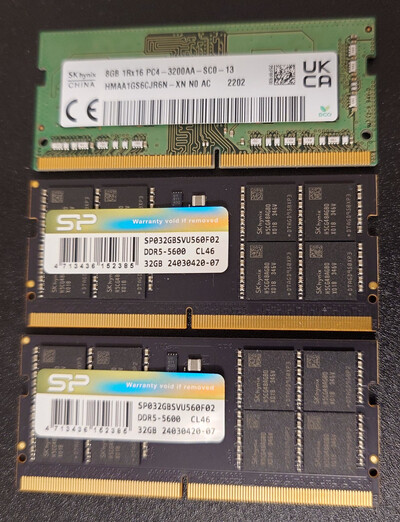
Memory has become insanely expensive over just the past few months. Micron cut production of Crucial, their consumer brand of memory, to focus on data center products at the end of 2025. This was after Micron received massive amounts of taxpayer money from the CHIPS Act. Crucial’s exit has radically changed the market. We’ve seen big shifts in RAM prices over the past few decades. It has always been volatile, but it’s never been this bad. In this unprecedented time of memory pricing, I started going back through all my previous purchases to see how far into the past I’d have to go to see the current-day cost per byte of memory.
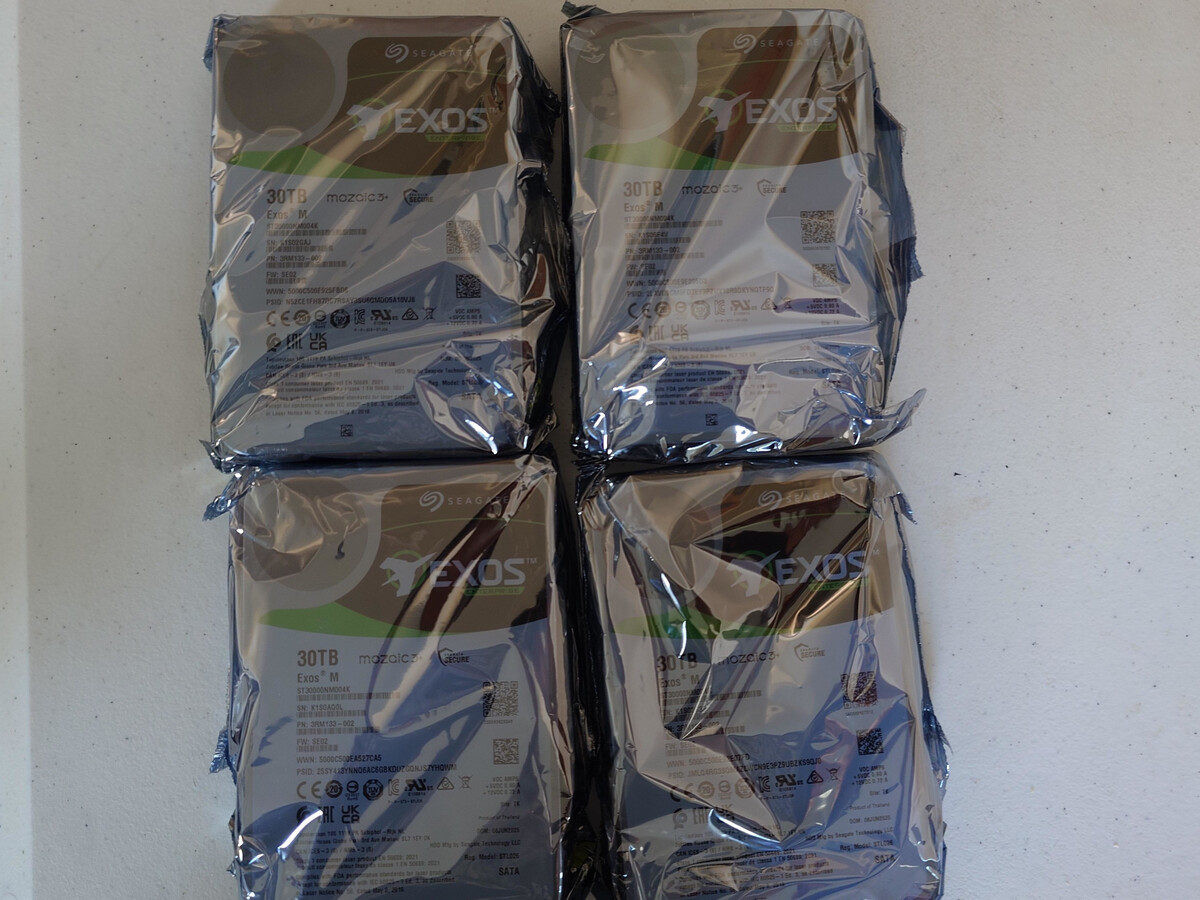
Over the course of my life, hard drives have continued to get denser as far as their data capacity. Back when I was traveling for years, I could comfortably put most of my data on a single hard drive. Over the years, when I reached capacity, I’d copy everything to a new drive and ship the old one as an offsite backup to a family member halfway across the world. In recent years, I’ve switched from smaller custom NAS servers to a custom rack-mounted solution with ZFS storage. I was able to upgrade to a ZRAID array before storage prices started skyrocketing. This post talks about the new 80TB ZFS RAID array I built, as well as how I’ve converted my old hard drives to backups using ZFS snapshots.
In today’s world of content generated by the Weighted Random Word Generators (also known as Large Language Models (LLMs); too often incorrectly referred to as Artificial Intelligence), the vast majority of top search results are a mix of mainstream news sites and automatically generated articles, which are difficult to read and verify for correctness. Too many people simply read and trust the generated answer at the top of the search results. For those who want to look deeper, the first step is to set your Internet time machines to the past, before the era of the modern chatbot.
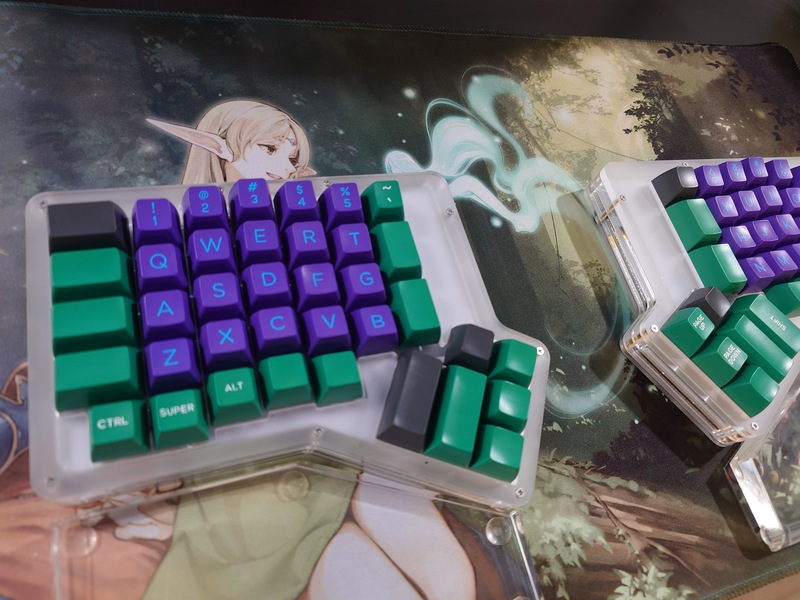
I’ve owned a lot of mechanical keyboards. Over two years ago, I started using an Ergodox layout, starting with the SliceMK. It was difficult to get used to the ortholinear layout of the Ergodox, but I’m glad I stuck with it, as I really enjoy the experience of typing on split keyboards. I later added the W-Ergo to my keyboard lineup, the first keyboard I’ve used with SA profile keycaps. A few weeks ago I built out another Ergodox profile keyboard: the IF-Ergo. It uses the Gateron Baby Kangaroo V2 switches, as well as the Domikey Crisis and Cyberpunk SA keycaps. This keyboard replaces my Slice MK as the primary keyboard for my work laptop.
In 2019, I placed a pre-order for a Purism Librem 5. It was touted as a Linux mobile phone, providing an alternative to the two big players in the cellphone operating system space. Two years later I attempted to cancel this pre-order, as the promised device had failed to materialize. Three years after my original order, I got an e-mail indicating the device I no longer wanted would finally ship. It took almost six years from my original order to get a refund. I was met with tons of excuses from support staff and eventually had to file a complaint with my credit card company to finally get the money restored. I’m honestly shocked Purism is even still in business. They’re a horrible company filled with liars. No one should give them any money for what must be garbage products.